 Vatican Necropolis Tour
The Complete Vatican Necropolis Guide
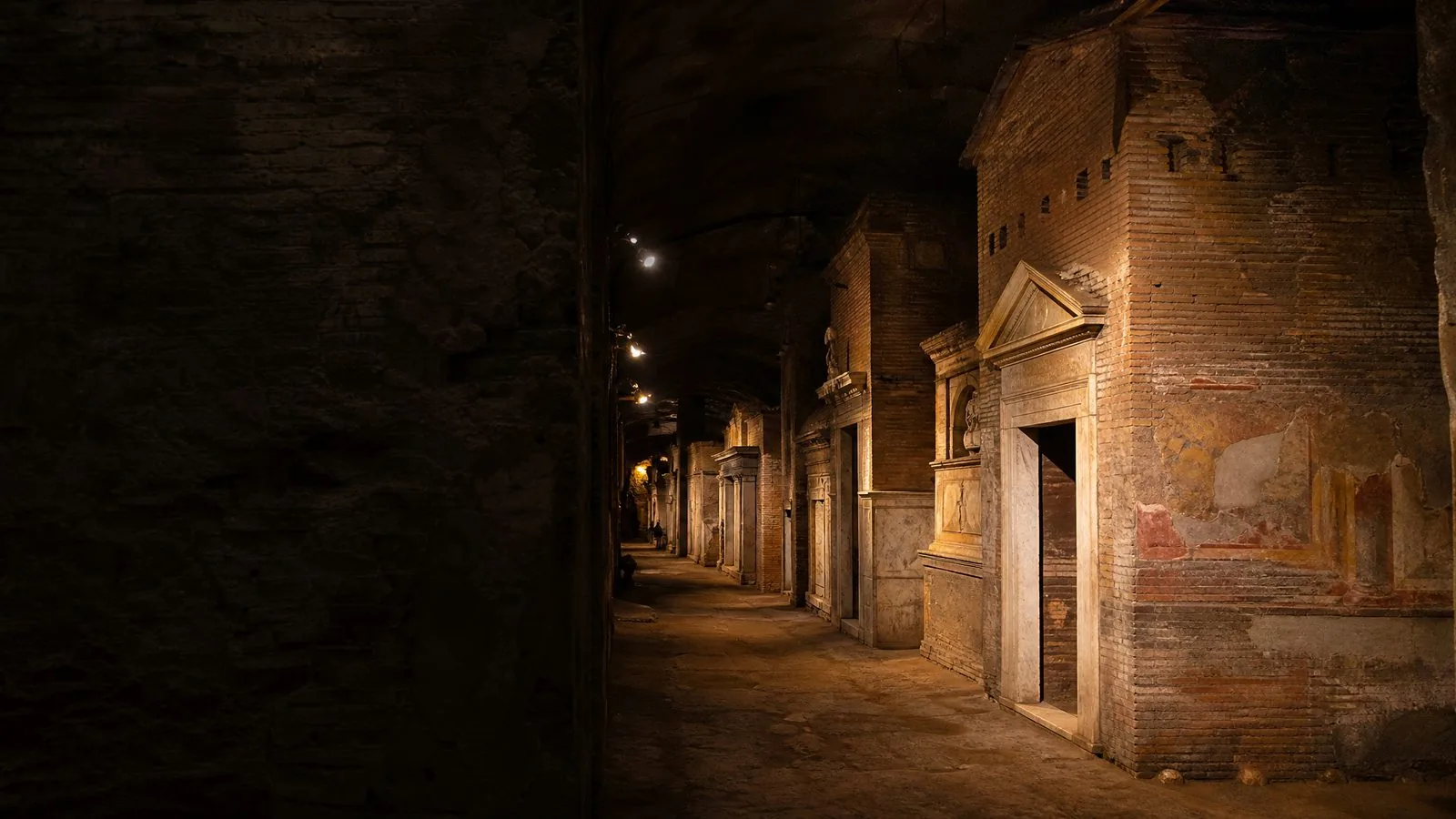
I have led visitors through Rome’s underground for 12 years — licensed guide, archaeology degree from La Sapienza — and the confusion is always the same. “Vatican Necropolis” means three different places. The official Scavi (the 2nd–4th-century mausoleum street directly under the basilica, bookable only through the Excavations Office at €13, max 250 visitors daily, 2+ weeks to months ahead). The Via Triumphalis (a separate, larger Roman cemetery, entered near Piazza del Risorgimento, €50 if you book via GetYourGuide). And the Vatican Grottoes (the papal crypt level, free with basilica entry). Half the questions I hear come from mixing these three up. Here’s what you actually need to know.
The three sites: a quick map
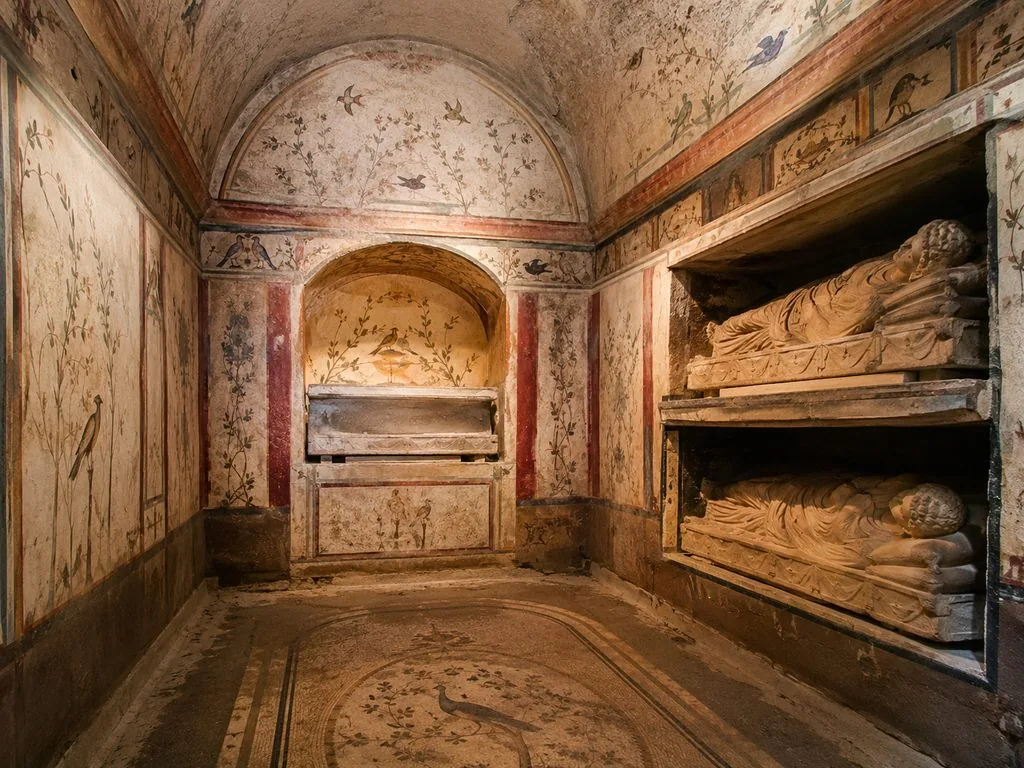
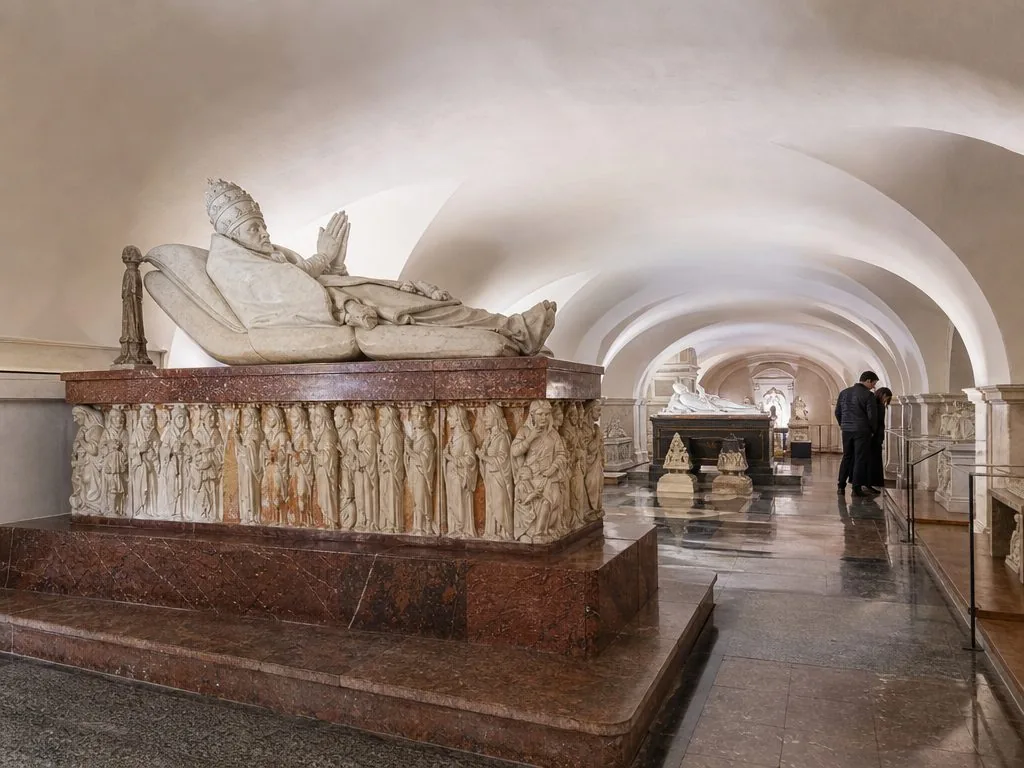
Imagine St. Peter’s as a layer cake. The top layer is the Renaissance basilica floor where pilgrims pray. One level down is the Grottoes — the crypt where popes are buried, including John XXIII in a glass-sided case, and Queen Christina of Sweden, one of the few women interred there. Two levels down is the Scavi, the pagan-and-Christian mausoleum street from the 2nd century AD through the 4th, when Constantine levelled the slope to build the first basilica over it. The grave marked by the Trophy of Gaius and the graffiti wall reading “Petros eni” (Peter is within) sits at the Scavi level, and epigraphist Margherita Guarducci’s 1968 identification of the bones — a man of 60–70, radiocarbon-dated to the 1st century — is the Vatican’s conclusion. Believers and sceptics both exist; I present the evidence dryly.
Why the reservation wall exists, and why it matters
The official Scavi tour is the best 90 minutes in Rome. I have done it many times as an accompanying guide. It fills up months ahead because only 250 people are allowed underground each day, and the Ufficio Scavi handles bookings in writing (email or fax form) — no phone, no walk-ups, and the queue is real. If you want the Scavi, start emailing now and expect to be months in queue even in winter. No GetYourGuide or tour operator sells it. This site’s honesty is that we say so plainly and give you bookable alternatives instead.
The €14–€89 ladder: what you can book today
The €14 catacombs entry at St. Callixtus on the Appian Way is the cheapest — Christian burial complex, guide-led only, constant 15°C underground (the real escape-the-heat option). The €20 grottoes tour is the grottoes alone, guided through the papal crypts one level up from the Scavi. The €33 underground tour is the best-rated at 4.8 stars, 5,494 reviews — it combines the grottoes, the Scavi mausoleum street, and ends at the graffiti wall. The €50 Via Triumphalis necropolis is the only true bookable Vatican necropolis, a separate cemetery under the Vatican hillside, runs via the Vatican Museums, compulsory guide, €50 on GetYourGuide, 40 reviews, 4.6 stars, strong data for a young listing. The €54 dome climb adds the 551 steps to the basilica crown (or ~320 with a partial elevator) and is the most-reviewed product here at 4.5 stars, 10,212 reviews. The €89 after-hours crypts tour is the premium pick — the Capuchin bone-decorated chapels and then the Scavi at night, transport included, 168 reviews, 4.6 stars, no photos allowed inside the catacombs portion. That €89 is genuinely special if you have the stamina.
The bones story: 1968, the graffiti wall, Guarducci
Here’s what happened. During World War II, under cover of excavation work, Vatican officials quietly exhumed bones from a cavity in the Scavi shrine known as the Trophy of Gaius. The bones sat in a room for years. In 1968, Pope Paul VI announced on 26 June that relics identified as Peter had been found. The evidence rested on Margherita Guarducci’s reading of the graffiti wall behind the Trophy: a fragment she read as “Petros eni,” meaning “Peter is within.” The bones were of a man aged 60–70, carbon-dated to the 1st century. Believers took this as confirmation. Scholars have questioned the reading, the identification, and the dating. The Vatican stands by the 1968 conclusion. When you visit the Scavi or grottoes, you see the wall and the shrine, and you decide. That’s the honest way to frame it.
Booking reality: the climate, the crowds, the dress code
The underground is warm (around 15°C year-round), humid, and often narrow. Wear comfortable shoes; the stone floors are uneven and sometimes wet. The crowds vary wildly by season and tour: the official Scavi runs in groups of about 12, “one group at a time,” and the guards lock the doors punctually. The bookable tours run larger groups most of the time. Morning (the basilica opens 7am) is quieter. Avoid Wednesday midday (papal audience closes the square) and Sundays (Angelus crowds; the museums are closed except the last Sunday of the month). Dress code: shoulders and knees covered inside the basilica; the dress code applies underground too. Jeans and sneakers are fine. Small water bottles pass security; large bags do not. No perfume or cologne underground (it interferes with breathing in tight spaces and with others’ experience).
The booking choice: Scavi direct, or book one of these six
If you have flexibility and time, write the Ufficio Scavi now for the €13 official tour. If not, or if you’re pressed for time, pick from the ladder above. Most people book the €54 dome tour for the full story with the climb. On budget, the €20 grottoes tour or €33 underground tour are solid. If you want the real Vatican necropolis and the Scavi direct is out of reach, the €50 Via Triumphalis is your option. None of these choices is wrong. Book early morning, wear good shoes, carry water, and read the dress code page before you go. The bones are down there either way. The walk is never disappointing.
Ready to book?
If the official Scavi list is full for your dates — it usually is — the tours below go underground at St. Peter’s this week. Prices and dates are live; cancellation is free up to 24 hours before on most departures. Compare all six on the all-tours page first if you are undecided.
Frequently asked questions
Is this guide about the Scavi tour or the Via Triumphalis necropolis?
Both, deliberately. The two sites share a name and little else. The Scavi tour runs under the basilica and is booked directly with the Excavations Office; the Via Triumphalis necropolis sits under the Vatican hillside and can be reserved online.
Can I visit the Vatican Necropolis without a tour?
No. Both necropolises are guided-access only. The Vatican Grottoes — the papal crypt level one floor up — are the only underground section you can walk into on your own with basilica entry. The grottoes page explains the difference.
How much does it cost to see the Vatican underground?
The official Scavi tour is €13 booked direct. Bookable alternatives run from €14 for the Catacombs of St. Callixtus to €89 for the after-hours crypts tour — the full ladder is on the cost page.