 Vatican Necropolis Tour
St. Peter’s Tomb: What’s Really Down There
The discovery
In the second half of the 20th century, archaeologists excavating beneath the basilica uncovered a 2nd-century memorial called the Trophy of Gaius. Below it, in a small burial niche, lay human remains and fragments of graffiti scratched into the plaster wall. Margherita Guarducci, an epigraphist (expert in ancient inscriptions), analysed the scratches and read them as Greek letters spelling “Petros eni” — “Peter is within.” Adjacent fragments seemed to invoke Peter’s name.
The bones and the graffiti
The skeletal remains near the niche were those of a man aged approximately 60 to 70 years at death, dated by analysis to the 1st century AD. The graffiti wall and the Trophy of Gaius context suggested this was a venerated burial site in early Christian times. On 26 June 1968, Pope Paul VI made a formal announcement: the Vatican concluded these remains were those of Simon Peter, Jesus’s apostle.
This is the Vatican’s conclusion. It is based on inscription analysis, bone dating, and archaeological stratigraphy. Other scholars have proposed alternative interpretations of the graffiti, questioned the dating, or noted that 1st-century bone remains cannot be definitively identified. Both the Vatican’s framing and scholarly scepticism coexist in the literature.
What you see on the Scavi tour
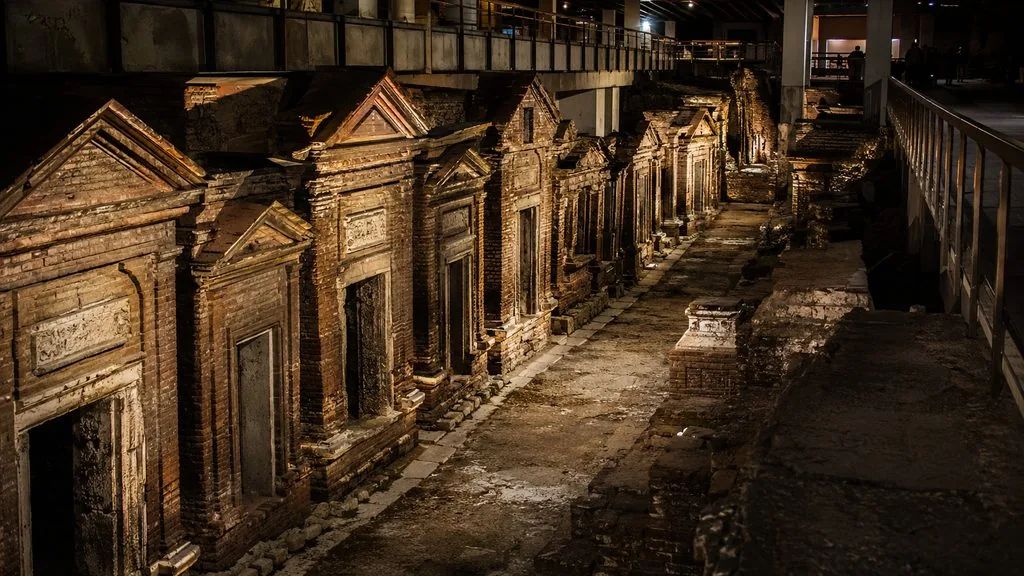
When you descend the Scavi, your guide will show you the Trophy of Gaius and the graffiti wall in situ. You will see the actual niche and fragments. The 90-minute tour is built around this endpoint — understanding how early Christians marked the grave, how the shrine was preserved through Constantine’s basilica construction, and what the Vatican believes about the relics. It is one of the most evocative walks in Rome.
If you can’t reach the Scavi
The Grottoes (the papal-tomb crypt level, one above the Scavi) hold informational plaques about the graffiti wall and the bones, though you do not see the original wall itself. The €20 grottoes guided tour and the €54 papal tombs and dome tour both include the Grottoes and the backstory.
Frequently asked questions
Are those really Peter’s bones?
The Vatican’s official conclusion is yes, based on graffiti inscription analysis (Guarducci’s work), bone dating (1st century), and archaeological context. Other scholars have questioned the reading of the graffiti or the certainty of bone identification. The graffiti wall and the niche are real and visible; the interpretation is where respectful debate exists.
What does the graffiti actually say?
The main fragment reads “Petros eni” in Greek letters, which translates as “Peter is within.” Adjacent scratches seem to invoke Peter’s name. Guarducci’s reading was formally accepted by the Vatican.
When was this discovered?
The Trophy of Gaius and niche were uncovered during 20th-century excavations. Paul VI’s announcement came on 26 June 1968. The Scavi tour typically ends at this exact spot.